Elaina is the Principal and Co-Founder of Ethos Properties, a real estate partnership founded in 2014, formerly as E & J Ventures. Leveraging her background in corporate real estate, she grew the business from a passion project into a robust investment and development portfolio.
Her 20+ year career in complex commercial real estate—notably within the demanding sectors of oil and gas operations—shapes her deep understanding of surface use, mineral ownership, severed estates, and intricate title mechanics. This rigorous analytical foundation gives Elaina a rare command over property assets that far exceeds standard industry boundaries.
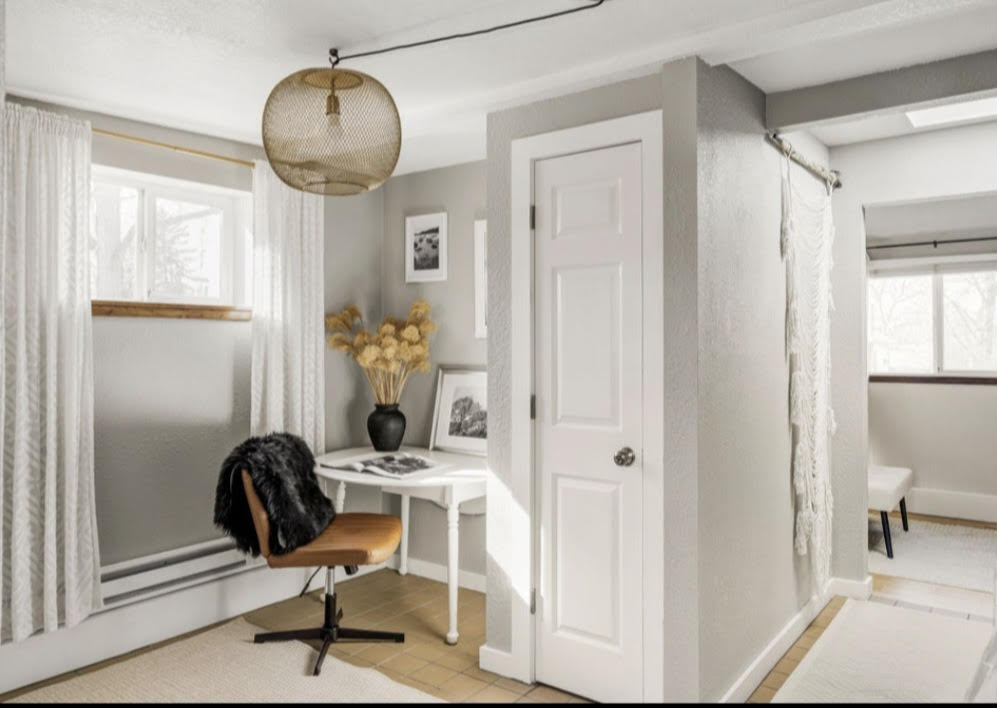
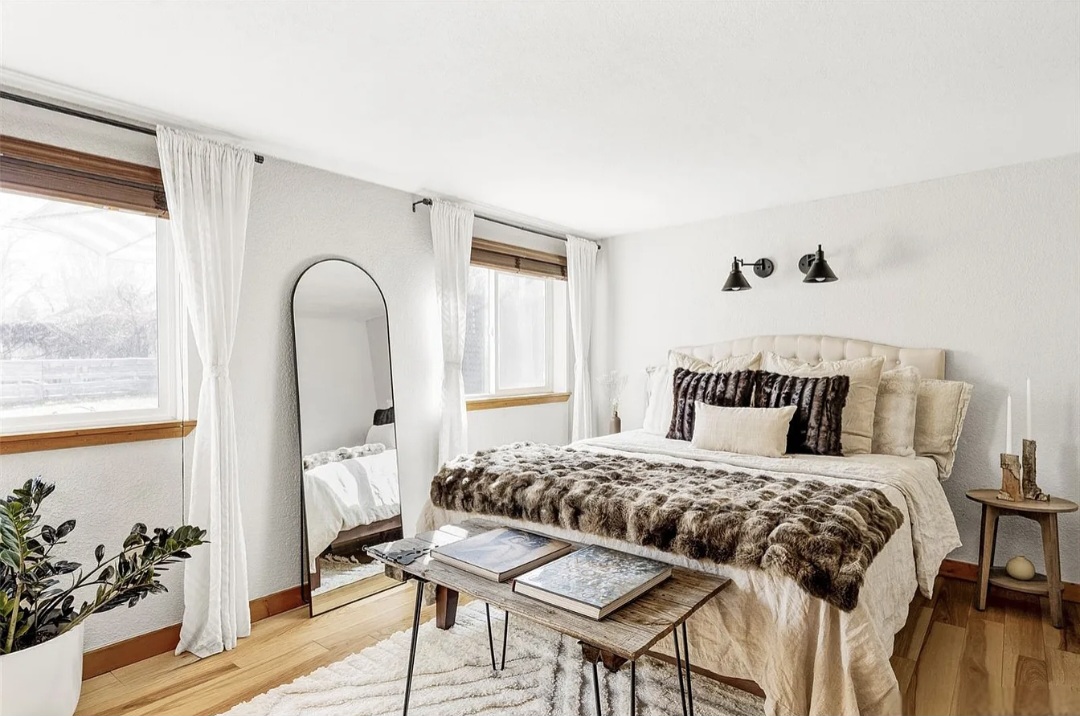
Running parallel to her technical real estate expertise is a decades-long creative endeavor in photography, interior rehabilitation, and landscape design. This unique synergy allows her to analyze an asset from the ground up, navigating complex legal frameworks while executing the comprehensive interior and exterior curation needed to realize a property's full potential.
Expertise
Redefining Expertise in Real Estate
True insight into property demands more than transactional knowledge — it requires mastery of both underlying structure and total environmental vision.
For Elaina, real estate doesn't stop at the boundary of a physical structure; it encompasses everything from the bedrock to the horizon.
This unique approach is anchored by six distinct pillars that define how Elaina invests, designs, and delivers excellence, honed over 20 years and $2B in real estate transactions:
1 — Title
Title Mechanics & Analytics
Navigating and untangling complex title histories, liens, and encumbrances to ensure absolute transactional security. What you cannot see matters just as much as what you can.
2 — Estates
Severed Estates, Rights & Estate Succession
Evaluating properties with split surface and mineral ownership to uncover hidden liabilities or latent value. Advising on testate and intestate property succession, interpreting wills, and analyzing estate residue to determine how real property passes.
3 — Risk
Asset De-Risking
Applying institutional-grade legal analysis to evaluate property investments from the ground up, protecting your capital before you reach the closing table. Having worked on some of the largest land and mineral MD&A transactions in the United States, Elaina brings the same disciplined approach used in complex, high-value deals to uncover hidden risks, strengthen negotiating positions, and safeguard long-term value.
4 — Staging
Interior Staging & Styling
Translating structural spaces into compelling, high-end narratives that resonate visually and emotionally with prospective buyers.
5 — Landscape
Landscape & Environmental Vision
Understanding the scale, character, and orientation of land. Elaina's deep connection to the horizon informs how a property sits within its environment.
6 — Photography
The Photographic Eye
Capturing the distinct soul of an environment through light and perspective — a skill honed through three decades behind the lens.
Testimonials
A Standard Recognized by Peers
"Though not an attorney herself, Elaina consistently operates at an attorney level, demonstrating exceptional autonomy and rigorous legal analysis."
Managing Partner & Executive Committee Member, Regional Law Firm
"Elaina possesses a level of precision and dedication that fundamentally elevates the firm's output on a consistent basis."
Founder & Managing Partner, Boutique & Pre-Eminent Oil & Gas Law Firm
"Her commitment to excellence is absolute, driven by the highest exacting standards."
Equity Partner, Global Am Law 50 Firm
"[Elaina] earned the highest performance evaluation score in the entire department, demonstrating unparalleled execution, rigorous asset oversight, and exceptional leadership."
Vice President, Fortune 500 Midstream Energy Corporation
"Working with her spoiled me for life. Her market insight was nothing short of impressive and she proactively brought to the table exceptional collaboration. Her buyer instincts paired with impeccable design delivered optimal results all around."
Realtor, Top Producing Agent
"It's a marvel to watch her creative mind at work. She has a remarkable eye for interior design, effortlessly executing spaces that tell a cohesive story through thoughtfully-curated colors, textures, and layers."
Interior Designer, Top Denver Architecture Firm
"Our experience renting from Jared and Elaina was exceptional from start to finish. The house and garden were absolutely charming and everything always functioned perfectly, making our tenancy stress-free and enjoyable. They were highly accommodating, most notably when we unexpectedly had to end our lease early. We would rent from them again in a heartbeat and they get our highest endorsement!"
Former Tenant
"Elaina and Jared consistently found us high-quality, long-term tenants, minimized vacancies, and took exceptional care of our property. Beyond day-to-day management, they provided valuable advice on strategic upgrades, successfully oversaw a major capital project, and expertly staged and marketed the home whenever it became available. Their professionalism, attention to detail, and proactive approach gave us complete confidence that our property was in the best possible hands."
Property Owner, Former Client
Portfolio
Curated Properties
Littleton, Colorado
1912 historic bungalow showcasing thoughtful design, strategic renovation, and refined spatial execution, located just blocks from historic Downtown Littleton.
Hudson Valley, New York
Contemporary property in the Hudson Valley region, featuring curated design, optimal spatial flow, and refined aesthetic execution.
Sanibel, Florida
Coastal residence on Sanibel Island featuring elegant design, premium positioning, and sophisticated finishing in one of Florida's most exclusive communities.
Where it all Began: at Closing Tables in Connecticut
During my last semester of college, I began working for a real estate attorney in Connecticut.
Learning the Fundamentals
When I entered that law office, over two decades ago, I was green. I had never been exposed to the mechanics of real estate finance, and I quickly discovered there was a whole world of terminology, documents, and processes I didn't yet understand.
The Local Nature of Real Estate
In Connecticut, as with select few other states, residential real estate closings are attorney-driven. This differs from most other states, including Colorado, where title companies play the central role in coordinating the closing.
That is to say, real estate is deeply local. The property may look the same, but the people, processes, and professionals behind the transaction can vary dramatically from one state to another.
Mastering Regional Differences
This similarly extends to oil and gas operations in major basins throughout the United States. When I began working in this dynamic energy sector, managing operations across Colorado, Wyoming, North Dakota, New Mexico, and Texas, I quickly learned that each jurisdiction operated within its own local, state, and federal frameworks, with unique permitting requirements, regulatory processes, and records systems. The ability to understand and adapt to those differences became one of the most important skills I developed and have carried throughout my career.
The Lesson That Endures
Looking back, each chapter of my real estate journey has reinforced the same lesson: real estate is never one-size-fits-all. Whether sitting at a closing table in Connecticut, navigating commercial real estate transactions in Colorado, or working within complex energy regulations across multiple states, success comes from understanding the details that make each situation unique. That curiosity, the desire to understand the process, the people, and the systems behind every transaction, is what continues to drive my passion for all things real estate.
This content is for informational purposes only and is not intended as legal advice. Readers should consult a qualified real estate attorney regarding specific legal questions.
How I Bought My First Income-Producing Property Nearly a Decade Ago Through a FSBO Transaction
Nearly a decade ago, I bought my first income-producing property, and it happened to be a For Sale By Owner (FSBO) deal. What made it unique wasn't just the property itself, but the fact that I represented myself as the buyer throughout the entire process.
From making the initial offer to managing due diligence and coordinating closing, I handled the transaction directly. It turned out to be a smooth and successful purchase that ultimately became a long-term, income-generating investment for nearly ten years.
Making the Offer Directly to the Seller
Since the property was FSBO, I worked directly with the seller to structure and submit the offer without a buyer's agent involved.
That meant clear, direct communication from the beginning and making sure both parties fully understood the terms without any intermediary interpretation.
Managing Due Diligence Independently
Once the offer was accepted, I was responsible for managing the entire due diligence process, including:
Scheduling and reviewing inspections
Evaluating disclosures and property condition
Tracking contractual deadlines
Coordinating financing and appraisal milestones
Even without representation, the process itself remained structured. The difference was that I had to be highly organized and proactive to ensure nothing was missed.
Letting the Title Company Handle Closing
The title company played a key role in handling the legal and administrative side of the transaction, including:
Title search and clearance
Escrow coordination
Final settlement statements
Recording the deed
Their involvement ensured the transaction was completed properly and in compliance with all legal requirements.
Negotiation Dynamics and Self-Representation
In this type of transaction, representing myself as the buyer introduced a different dynamic.
One potential advantage is negotiation flexibility. Without a buyer's agent involved, there can be more direct communication and a simpler structure to the transaction for both parties.
In some cases, it can also create an efficiency advantage for the seller, since the traditional buyer's agent commission does not factor into the deal structure in the same way. Depending on how an offer is structured, that flexibility can sometimes influence pricing or terms.
From my perspective, the biggest benefit wasn't simply cost savings, it was having direct control over communication, timing, and decision-making throughout the process.
That said, this approach does come with added responsibility. There is no buffer for missed details, miscommunication, or process errors.
The Outcome
The transaction closed successfully without complications, and the property went on to become a consistent income-producing asset for almost a decade.
Looking back, the value wasn't just in the investment itself, but in gaining a full understanding of how a real estate transaction works from start to finish.
Pros and Cons of a FSBO Self-Represented Purchase (Buyer Side)
Pros
Direct communication with the seller
Greater control over timing and decision-making
Potential for more flexible negotiation structure
No reliance on third-party interpretation of terms
Strong learning experience and process transparency
Cons
Full responsibility for managing deadlines and paperwork
No professional buffer for negotiation strategy
Higher risk of missing important details if not organized
Requires comfort with contracts, inspections, and transaction flow
Can be time-intensive and detail-heavy throughout the process
Final Thoughts
FSBO transactions can be highly effective in the right situation, but they are not passive experiences. They require organization, attention to detail, and a willingness to take full responsibility for the process.
In my case, it worked out well and became a foundational investment experience that lasted nearly a decade. But like most things in real estate, success comes down to preparation, awareness, and execution, not just opportunity.
This content is for informational purposes only and is not intended as legal advice. Readers should consult a qualified real estate attorney regarding specific legal questions.
HOA vs. Community Covenants: They're Not the Same Thing
One of the biggest misconceptions I encounter during real estate due-diligence is the assumption that no HOA means no restrictions. Unfortunately, that's not always the case.
Many buyers (and even experienced real estate professionals) are surprised to learn that a subdivision can have recorded community covenants that remain legally enforceable even when there is no active Homeowners Association (HOA).
What Is an HOA?
A Homeowners Association is an organization responsible for managing and enforcing the rules of a community. HOAs often collect dues, maintain common areas, and oversee architectural approvals and other community standards.
When purchasing property in an HOA, buyers typically know they should expect governing documents, assessments, and ongoing obligations.
What Are Community Covenants?
Community covenants, also known as Covenants, Conditions, and Restrictions (CC&Rs), are recorded legal documents that "run with the land." They are attached to the property itself and continue to apply regardless of ownership changes. These covenants can exist with or without an active HOA. Depending on the subdivision, recorded covenants may include restrictions on:
Building size and setbacks
Exterior materials or architectural standards
RV, boat, or trailer parking
Livestock or certain animals
Home-based businesses
Fencing requirements
Short-term rentals
Further subdivision of the property
In some cases, neighboring property owners, or other parties identified in the covenants, may still have the legal authority to enforce these restrictions, even if there is no HOA collecting dues or holding meetings.
Why This Matters During Due Diligence
A title commitment will often list recorded declarations and restrictive covenants as exceptions to title insurance. However, these documents may not receive the attention they deserve during the transaction.
It's easy to assume that "no HOA" means complete freedom to use the property as you wish. That assumption can lead to unpleasant surprises after closing.
Whether you're planning to build a shop, park an RV, raise animals, operate a business from home, or simply make improvements to your property, existing covenants may affect your plans.
The Bottom Line
Don't confuse the absence of an HOA with the absence of restrictions.
Part of thorough due-diligence is reviewing the recorded documents that affect a property, not just determining whether an HOA exists. Understanding these restrictions before closing can help buyers make informed decisions and avoid costly surprises later.
If you're purchasing property, taking the time to review recorded covenants is one of the most valuable steps you can take before signing on the dotted line.
This content is for informational purposes only and is not intended as legal advice. Readers should consult a qualified real estate attorney regarding specific legal questions.
A Neighbor with a Passion for Conservation
Most people know Paul Tudor Jones as a legendary investor, but I've always thought of him through a more local, personal lens.
My family owns a parcel of land that once included wetlands, rendering part of it unsuitable for development. Rather than leaving those unbuildable acres idle, we sold them to our neighbor, none other than Paul Tudor Jones. That decision, weighed carefully at the time, ultimately aligned with something larger: keeping land like that in the hands of someone who values open space.
Over time, I was curious to learn more about Tudor Jones's broader conservation work.
Beyond finance, Tudor Jones has supported major environmental efforts, including the restoration of the Everglades through The Everglades Foundation, as well as land and habitat preservation projects in places like Colorado and East Africa.
What stands out to me is the idea that wealth and influence can be directed toward protecting landscapes that might otherwise be lost to development. In the case of my family's transaction, it is the very wetlands that I look out onto from my family's wrap-around porch that remain undeveloped and part of a larger natural ecosystem.
It's a reminder that sometimes the most lasting investments aren't financial at all, they're the places we choose to preserve.
This content is for informational purposes only and is not intended as legal advice. Readers should consult a qualified real estate attorney regarding specific legal questions.
Why I Chose to Manage My Own Rental Property
When we bought our rental property, I made a deliberate decision to manage it myself rather than hire a property manager. I wanted full control of our investment, and a real understanding of what it takes to run a business.
I also chose to manage it because I knew I could. I had the experience and know-how to get things done effectively, and I trusted my ability to stay on top of the details and make sound decisions.
I knew there would be a learning curve, and I welcomed the challenge. If I was going to invest in real estate, I wanted to understand the business in depth, even if that meant learning through trial by fire.
What I quickly discovered is that owning a rental requires systems, communication, consistency, and sound judgment. Even with careful screening and clear leases in place, you still encounter situations where real life doesn't fit neatly within the terms of a contract. As a landlord, you're constantly working to balance protecting your investment with responding appropriately to human circumstances.
One of the most important parts of the experience has been doing it as a team with my husband. I come from a legal background, so my instinct is to be structured, detail-oriented, and firm about enforcing rules. My husband naturally takes a more relaxed, relationship-focused approach. At times, I would lean toward strict enforcement, while he encouraged stepping back to consider context and the human side of a situation. Other times, my structure helped keep us consistent and aligned. Reflecting back on it now, I'm convinced that it's this very balance that led to our success.
Overall, I wouldn't trade the experience. It has made me a more informed investor and given me a deeper understanding of what it really means to be responsible for an investment, and for others.
This content is for informational purposes only and is not intended as legal advice. Readers should consult a qualified real estate attorney regarding specific legal questions.
Sometimes the Best Real Estate Deal Is the One You Walk Away From
Over the years, I've walked away from more deals than I can count. Some of those properties checked every box. I could already picture the renovations and finished product.
But then came the title investigation.
Uncovering the Legal Story
Before I commit to purchasing any property, I spend time digging into its history. This is one of my absolute favorite things to do. I'm not just looking at the home itself, I'm looking at the property's legal story. Who owned it? Are there unresolved liens? Easements? Boundary disputes? Probate issues? Unreleased mortgages? Restrictive covenants? Tax problems? Access concerns?
These are the kinds of issues that can turn what looks like a great investment into an expensive mistake.
Beyond the Realtor's Scope
While real estate agents do an incredible job helping buyers and sellers navigate the transaction, a detailed title investigation typically falls outside the scope of what a Realtor is hired to do. Their expertise is marketing, negotiations, contracts, and guiding clients through the buying and selling process. The deeper legal research into a property's title is a separate layer of due diligence that every serious buyer should consider before closing.
I've had properties that looked perfect on the surface, only to uncover issues that would have cost thousands of dollars, or years of legal headaches, to resolve. As disappointing as it was to let those opportunities go, I've never regretted walking away from a bad deal.
Emotion vs. Discipline
In real estate, emotions can be powerful. It's easy to fall in love with a property. But successful investing requires balancing excitement with careful research. Sometimes the smartest investment decision isn't saying "yes", it's having the discipline to say "no."
Every property has a story. My job is to uncover that story before I become part of it.
Due Diligence as Investment
That's why I believe due diligence isn't just another step in the buying process, it's one of the most important investments you can make. A thorough title investigation can reveal risks that aren't visible during a showing or even during a standard inspection.
At the end of the day, I'd rather lose a deal than inherit someone else's problems. And if that means walking away from a property I truly wanted, I'll do it every time.
Protecting Your Investment
Because protecting your investment always comes before closing the deal.
This content is for informational purposes only and is not intended as legal advice. Readers should consult a qualified real estate attorney regarding specific legal questions.
A Lifelong Fascination with Real Estate
Some interests never leave us. For me, it's always included real estate.
Growing Up with Architecture
When I was young, my dad told me we lived in a Cape Cod. I was fascinated that homes had names, so I asked him to teach me all the architectural classifications that define New England (where I was born and raised) — Cape Cods, Shingle-Style, Saltboxes, Colonials, Farmhouses, and more.
My dad had our first home built the year before I was born, and because he worked in the lumber business, he had an appreciation for quality materials and craftsmanship. He carefully selected details like the beautiful, knotty wide-plank floors and slate entryway — elements that made the home feel unique and special.
That feeling is something I absorbed and still carry with me today. I notice details. I notice patterns. I notice unique architectural elements. I notice craftsmanship.
A Decades-Long Passion
Simply because I enjoy it, I've attended more Open Houses than I can count (it's in the hundreds). I peruse MLS listings every single day. I've devoured myriad design magazines.
After decades of doing this, you begin to recognize patterns — not because you're looking for them, but because you've spent a lifetime paying attention.
What Lifelong Curiosity Teaches
Looking back, I've realized that the things we return to simply because we're curious often become the things we understand best.
For me, real estate has never been just an investment. It's been a lifelong fascination.
A Home That Reflects It All
Today I live in a historic 1915 Two-Story Craftsman that I lovingly maintain inside and out — restoring original elements of a century-old home and landscaping endless gardens around its perimeter is truly the joy of my life.
This content is for informational purposes only and is not intended as legal advice. Readers should consult a qualified real estate attorney regarding specific legal questions.
Your Lease Is Your Greatest Asset as a Landlord
Many landlords believe their greatest asset is the property itself. While your investment property is certainly valuable, I'd strongly argue that your lease agreement is your greatest asset.
More Than Just a Document
A well-drafted lease is far more than a document a tenant signs before moving in. It protects your investment, establishes clear expectations, helps prevent disputes, and provides the framework you need if problems arise.
Staying Current with the Law
One of the best investments I've made as a landlord has been the time I spent developing and maintaining a strong, protective lease. I don't simply reuse the same lease with each new tenant. With every tenancy turnover, I review and update it to reflect changes in landlord-tenant laws, county regulations, court decisions, and local requirements. The law is constantly evolving, and an outdated lease can leave landlords exposed to unnecessary risk.
Beyond Boilerplate
Early in my experience as a landlord, I was surprised to learn that many fellow landlords were relying on generic, boilerplate leases. I also reached out to several property management companies to better understand what their leases looked like. I found that many of those agreements were fairly basic as well. That experience reinforced my belief that a lease should be much more than a standard form, it should be a carefully crafted document designed to protect your investment and reflect the realities of today's landlord-tenant environment.
Learning from Crisis
The importance of staying current became especially clear during the COVID-19 pandemic. Landlords across the country found themselves navigating an unprecedented wave of emergency federal, state, and local regulations. The CDC's temporary eviction moratorium prevented many landlords from pursuing evictions for nonpayment, even as rental obligations continued to accrue. Many property owners felt they were left carrying a significant financial burden while still being responsible for mortgages, taxes, insurance, and maintenance costs. It was a powerful reminder that landlord-tenant laws and regulations can change quickly, and landlords must be prepared to adapt.
Clear Expectations, Fewer Problems
In my experience, many landlord-tenant issues can be avoided before they ever begin. When expectations are clearly defined in a comprehensive lease, both parties have a reliable point of reference, reducing misunderstandings and creating a more successful tenancy.
Your Lease as Risk Management
As landlords, we invest significant time and money maintaining our properties. Investing that same attention in your lease is one of the smartest decisions you can make. A strong lease isn't just paperwork, it's one of the most valuable risk-management tools you have.
Your property is your investment. Your lease is what protects it.
This content is for informational purposes only and is not intended as legal advice. Readers should consult a qualified real estate attorney regarding specific legal questions.
The Shocking Amount of Money You Could Be Saving on Your Mortgage
When most people buy a home, they focus on one number: the monthly payment. And that makes sense. It is the number that impacts your budget every single month.
But there's another number that deserves just as much attention: the total amount of interest you will pay over the life of your loan.
The difference between a 15-year and a 30-year mortgage can add up to hundreds of thousands of dollars.
Have You Ever Looked at an Amortization Schedule?
An amortization schedule is simply a breakdown of every mortgage payment you will make over the life of your loan. It shows how much of each payment goes toward interest and how much goes toward principal (the actual amount that reduces your loan balance).
This is where many homeowners are surprised.
During the early years of a 30-year mortgage, a large portion of your payment goes toward interest rather than paying down your principal. It can take years before you begin making significant progress toward actually paying down your mortgage.
Let's Look at the Math
Assume the home you are buying has a purchase price of $500,000 and you are putting 20% down. That equates to a $400,000 mortgage. Using a hypothetical 6% interest rate, here's what that looks like against two loan terms:
30-Year Mortgage
Monthly principal and interest payment: approximately $2,400
Total paid over 30 years: approximately $864,000
Total interest paid: approximately $464,000
15-Year Mortgage
Monthly principal and interest payment: approximately $3,375
Total paid over 15 years: approximately $607,000
Total interest paid: approximately $207,000
That is NOT insignificant. Choosing a 15-year mortgage over a 30-year mortgage, in this scenario, equates to about $975 more per month but a $257,000 savings in interest over the life of the loan.
But What If You Invested the Difference Instead?
This is an important question, and one worth considering.
Instead of putting that additional $975 per month toward a 15-year mortgage, what if you chose a 30-year mortgage and invested the difference?
Assuming an average annual return of 10% (often referenced as the long-term historical average of the stock market, although future returns are never guaranteed), investing $975 every month for 30 years could potentially grow to nearly $2 million.
That number is certainly compelling.
However, there is an important assumption behind that calculation: you have to consistently invest that money for 30 years and avoid spending it.
For many people, that extra monthly cash flow does not get invested, it gets absorbed into everyday life. Home improvements, vacations, unexpected expenses, cars, family needs, and lifestyle changes can all impact our ability to consistently save.
A 15-year mortgage, on the other hand, creates what many people consider a form of forced savings. Each payment builds equity, reduces debt, and provides a guaranteed benefit equal to the interest you are no longer paying.
My Mortgage Journey
Over the years, I have had three different mortgages: a 30-year, a 20-year, and most recently, a 15-year mortgage.
Each one made sense during a different stage of my life, and I don't regret any of those choices.
But looking back, the 15-year mortgage was one of the best financial decisions I have made.
For me, the higher monthly payment was worth knowing I was building equity faster, paying significantly less interest, and moving toward owning my home outright much sooner.
A Different Market Today
It's important to acknowledge that today's real estate market looks very different than it did when I bought my current home over a decade ago.
Home prices, interest rates, inflation, and the overall cost of living have all changed dramatically.
In fact, if I were buying a home in today's market, I'm not sure I'd be able to make the same decision I did a decade ago.
Every buyer's circumstances are different and should be weighed carefully.
The Bottom Line
When choosing a mortgage, don't look only at the monthly payment.
Look at:
The total interest you will pay
How quickly you will build equity
Your long-term financial goals
Whether you would realistically invest the difference with a longer loan
Every buyer's financial situation, priorities, and comfort level are different.
My hope is simply that more people take the time to understand the true cost of their mortgage, not just what they can afford each month.
This content is for informational purposes only and is not intended as legal advice. Readers should consult a qualified real estate attorney regarding specific legal questions.
The Places We Don't Forget
When I think of my childhood summers, I think most fondly of my family's rustic red cottage perched above a serene lake in the Adirondacks.
It wasn't anything glamorous, it was a simple cottage that we opened up just for the summer and visited for a few precious weeks each year.
But those weeks were unforgettable.
The Long Walk Down
The moment we arrived, I couldn't wait to get down to the water. I would head straight for the dock, following the long, steep, seemingly treacherous path of natural stone steps that led from the cottage down to the lake.
That first quiet moment, overlooking the water from the dock, was always the same, a serenity unlike anything else.
Days on the Water
Swimming, boating, waterskiing, canoeing, and fishing ensued. We'd buy live worms, and I loved carefully hooking the bait, casting my line, and watching that little bobber float on the surface, waiting for it to disappear. I caught so many fish from that dock, and every one of them felt like an accomplishment.
Nights Under the Stars
At night, I slept on the screened-in porch, under rolling thunder and lightning bugs.
These are the memories that live in my heart.
What Makes a Place Memorable
Often, the most magical places are rarely the biggest or the most impressive. They are the places where families gather, where traditions take root, and where ordinary moments become the memories we carry for a lifetime.
That is the enduring promise of attainable real estate.
This content is for informational purposes only and is not intended as legal advice. Readers should consult a qualified real estate attorney regarding specific legal questions.
Why My Hands Are Usually Covered in Dirt
People often ask what I enjoy doing when I'm not working, and the answer is almost always the same: you'll probably find me outside with my hands in the soil.
A Journey of Trial and Error
My love for landscape design didn't happen overnight. Like most hobbies worth pursuing, it started with curiosity, a little overconfidence, and more trial and error than I'd like to admit. I've killed more plants than I care to count. I've planted things in the wrong place, underestimated how big something would grow, and spent countless weekends moving rocks, only to decide they looked better exactly where they started.
And honestly? I wouldn't change a thing.
It's been nearly 20 years since I first started gardening, and every mistake has taught me something. Every season has made me a better gardener, designer, and steward of the land.
The Work I Love
I joke that I asked for a chainsaw a few birthdays back, but it's only half a joke, I genuinely love the work. Trimming trees. Pruning. Deadheading. Hauling gravel. Moving boulders. Digging holes. Rearranging everything after convincing myself I had it perfect the first time.
Beyond Beauty
What I love most is that landscaping gives back. A thoughtfully designed landscape isn't just beautiful, it creates habitat for pollinators, supports birds and beneficial insects, improves soil health, and brings life to a property throughout every season. It's one of the few hobbies where the rewards extend far beyond your own enjoyment.
Of course, there's also the practical side. A well-designed landscape can significantly enhance a home's curb appeal and long-term value.
Curating Spaces
I've come to realize that I don't just enjoy landscaping, I enjoy curating spaces.
Whether it's layering textures, balancing color, creating inviting pathways, or creating the perfect outdoor seating areas, I love building environments that make people want to slow down, breathe deeply, and spend a little more time outdoors.
This content is for informational purposes only and is not intended as legal advice. Readers should consult a qualified real estate attorney regarding specific legal questions.
Do You Remember Your First Place?
Outside my first apartment building - Boston 2003
We all have one. The first place that was entirely our own.
Maybe it was a tiny apartment, a little house, or a studio with more charm than square footage. Maybe it wasn't perfect by anyone else's standards, but somehow it became the backdrop for a season that shaped us.
Do you remember yours?
I certainly remember mine.
It was a tiny efficiency apartment in a stately Victorian at the legendary corner of Commonwealth Avenue and Massachusetts Avenue in Boston, just two blocks from the Harvard Bridge. It was my final semester of college, and although the building was reserved for post-grads only, the landlady decided to make an exception. She interviewed me. Perhaps I had an honest face... perhaps she sensed I would care for the little apartment as much as I hoped it would care for me... or perhaps she knew I was willing to shell out a fortune, given that my situation was dire... whatever the reason, she handed me a key. And with it, a quiet kind of freedom.
My entire world fit into roughly 100 square feet that cost an astonishing arm and leg. For such a tiny apartment, however, the oversized bathroom felt wonderfully unexpected. There was a large bathtub where I spent countless evenings absorbed in a good (non-academic) book, letting the warm water wash away the weight of classes and papers and exams.
From the bathroom window, I could see the iconic dome of MIT rising above the Charles River.
Campus was about a fifteen-minute walk in the opposite direction, and those fifteen minutes were a welcome crossing between two worlds.
I'd had a total of 11 roommates over the previous four years of college and I always yearned to be on my own. That first apartment finally gave me the distance and freedom I craved. It gave me room to breathe.
Directly diagonal from my apartment was the T stop (making transit a cinch), famed Newbury Street (shopping at my fingertips, and oh, did I shop!), the Blue Cat Cafe (long since closed down but which served the most delectable chocolate soufflé), and the towering Virgin Records Superstore.
Whenever studying became too tiring, I'd wander over to the records store, slip on a pair of headphones, and disappear into music for a little while. Before playlists were curated by algorithms, there was something magical about discovering an artist by chance. When the store closed at 11 p.m., I'd make the short walk back to my little apartment, carrying a new soundtrack for that season of my life.
And that season felt magical.
Life there wasn't perfect, of course. My hair dryer blew the fuse with remarkable consistency, and resetting the breaker became part of my morning routine. Not to mention, there was no laundry unit, so I had to walk an abhorrent distance regularly, all 5'3" of me hauling a huge sack of my dirty clothes. But even that has become a cherished memory.
I could go on forever about how that first apartment shaped me, but I'll leave you with this: Some homes give us roots while others give us wings. That little apartment gave me wings. Because within those mere 100 square feet, I found a life that fit me perfectly.
And sometimes, that's all a home needs to do.
This content is for informational purposes only and is not intended as legal advice. Readers should consult a qualified real estate attorney regarding specific legal questions.